Uses and abuses of cryptograph hashes
A whirlwind tour
by David Turner
Properties of hashes
- One-way functions
- Small, fixed-size output
- Collision-resistant
- Super-useful
Output size
- SHA-1: 160 bits (20 bytes)
- SHA-256: 256 bits (32 bytes)
- SHA-3: arbitrary
Collisions
- Two different inputs, same output
- Given N possible outputs, inputs give a 50% probability of collision
- Assuming your hash function is good
Contents
74136fa137c00edf7166034ea2a0bc5a0d1d22b7
Contents
- deduplication
- content-addressed storage
- data integrity (sometimes)
- password storage
- bitcoin
- flipping coins over the telephone
- bittorrent
Deduplication
- Same hash implies same content
- Store a mapping from hash to content location
Content-addressed storage
- A file's hash is its name
- Automatic naming
- Automatic deduplication
- Git
Data integrity
- Protects against random data changes
- Any change to your file will change the hash
- But you have to control the hash
Data integrity (with teeth)
- Keyed hash
- Can only be reproduced with the secret
- Protects against bad people
- HMAC(K, m) = H((K xor opad) | H((K xor ipad) | m))
Data integrity (with teeth)
- Keyed hash
- Protects against bad people
- Can only be reproduced with the secret
- [APPROPRIATELY LONG BLACK BOX]
Hashing fast and slow
- Hashing is usually fast
- SHA-1: ~11 cycles per byte
- Even faster on GPUs or ASICs
- $50 = 10 GH/s
One-way in theory...
- You can reverse a hash...
- ...by trying lots of possible inputs...
- ... like all possible 8-letter passwords!
Slow hashing
- Add a "salt"
- Repeatedly hash
- Use lots of memory

Time is money
- Bitcoin mining
- Find some input where H(x) ends with ...000
- More zeros = more work
Hashes of hashes
- A hash validates its input
- Yo, Dawg
- Transitively
- Git commits contain parent hashes
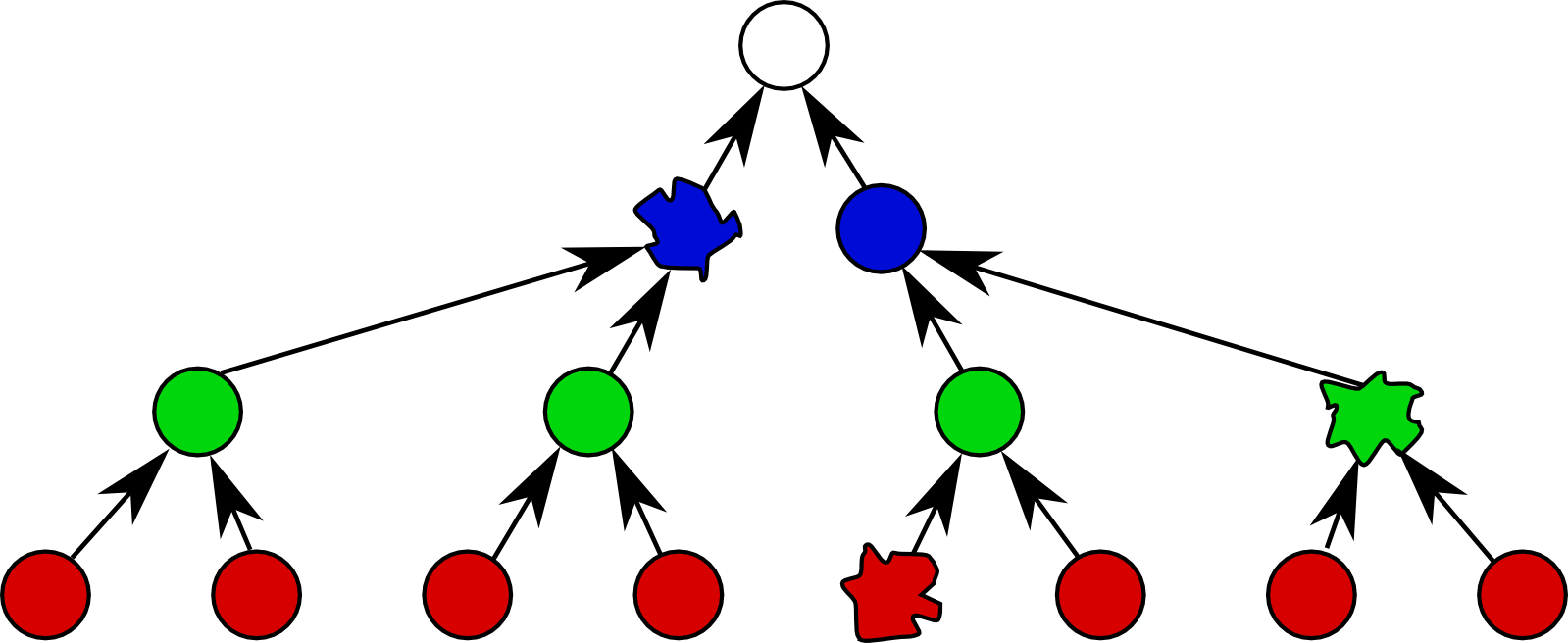
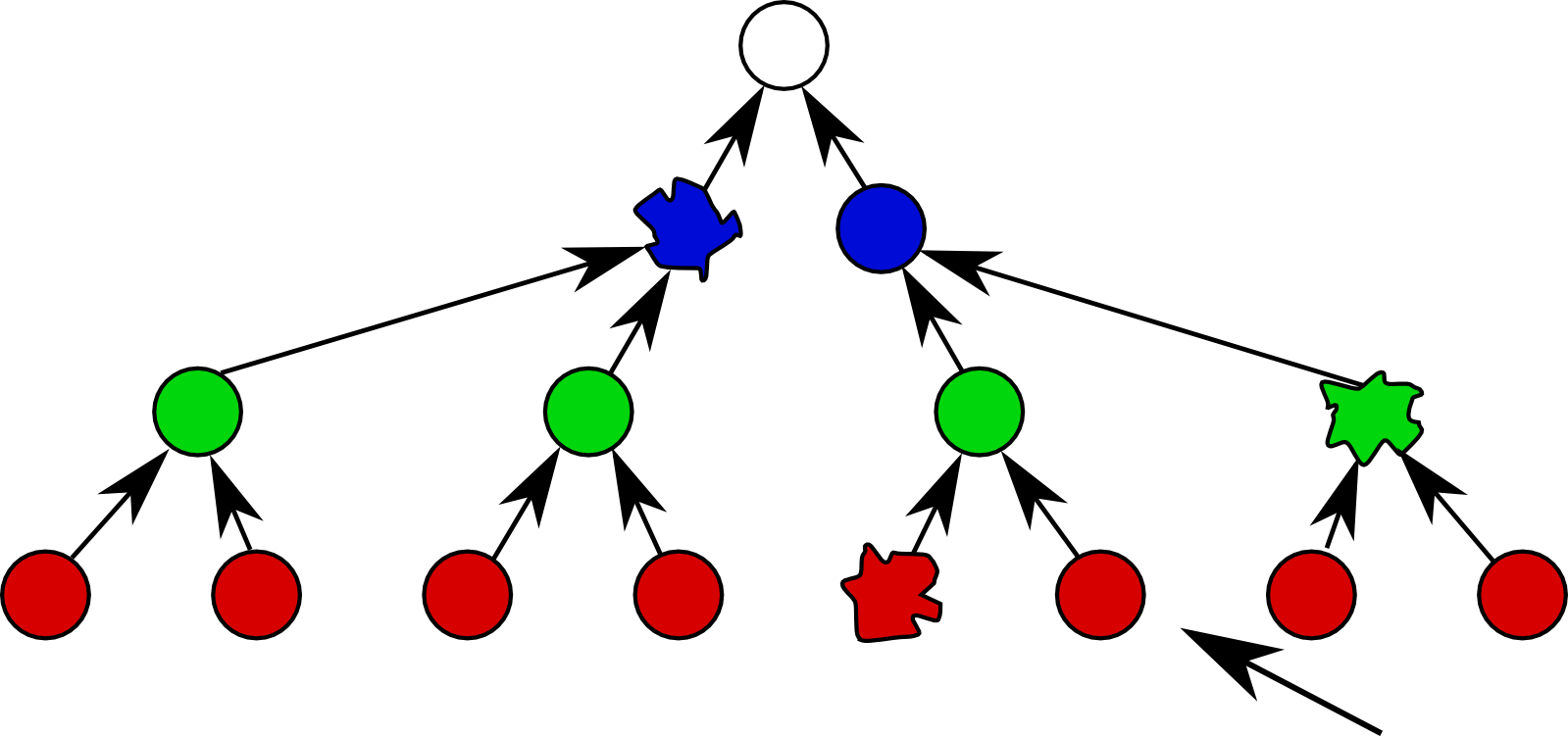
Merkle trees
- Leaves contain hashes of content
- Non-leaf nodes contain hashes of children
- Git "trees" (directories) work like this
- Fine-grained corruption detection
Bittorrent and Merkle trees
To validate a chunk, we need- The chunk's hash
- The chunk's sibling's hash
- The chunk's uncles' hashes
- The root hash